KO Special Correspondent
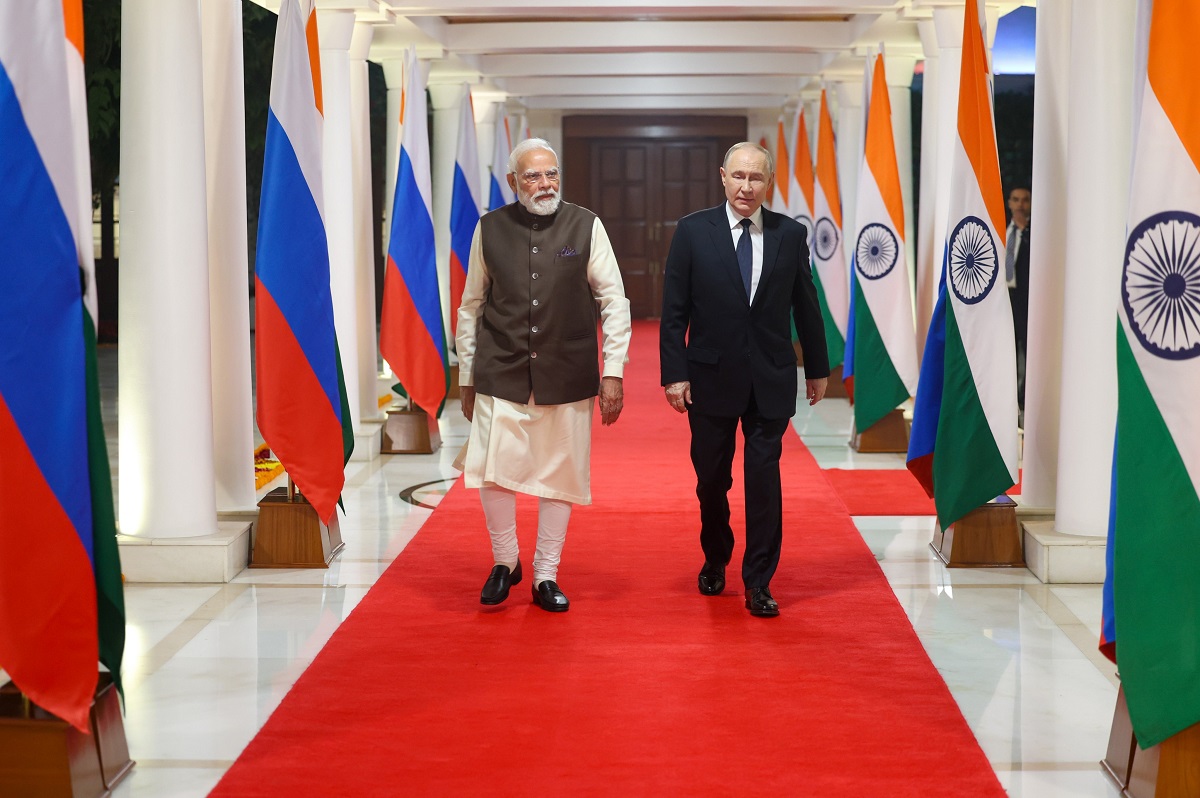
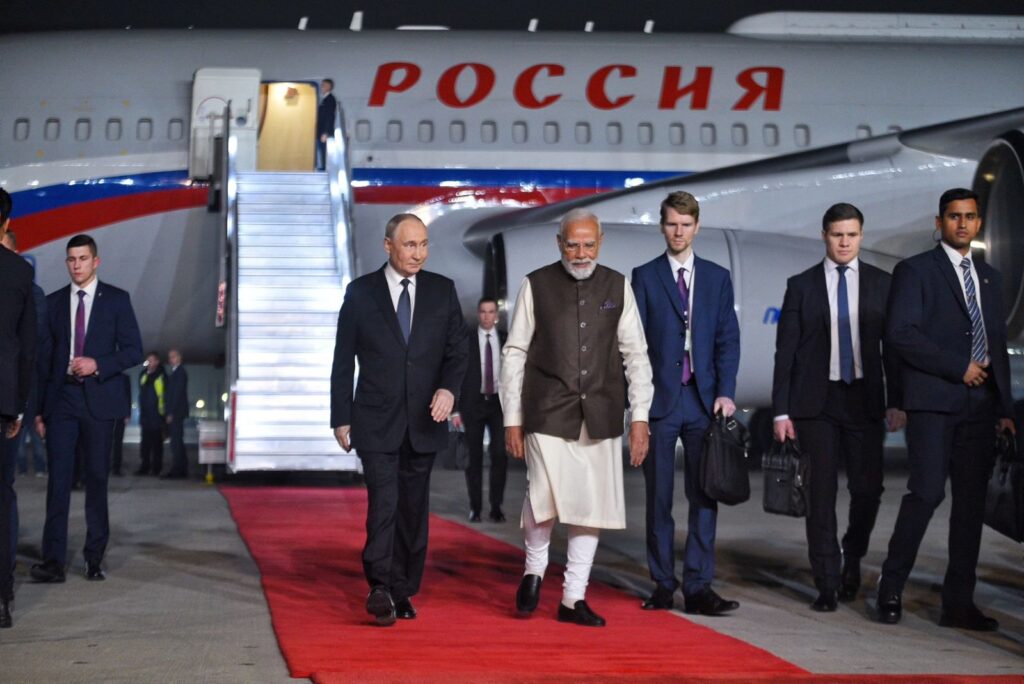
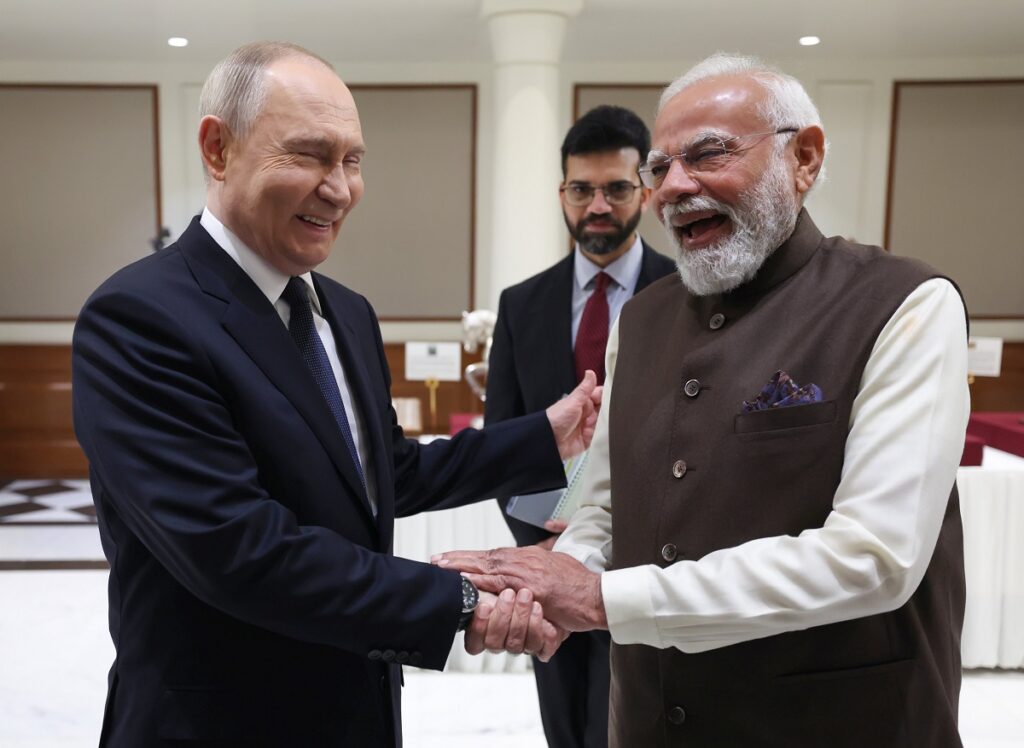
New Delhi- Russian President Vladimir Putin arrived in New Delhi on Thursday for a state visit at the invitation of Prime Minister Narendra Modi—his first trip to India since the Ukraine war began nearly four years ago. Modi personally received Putin with a warm embrace at Palam Airport, a gesture that underlined the significance New Delhi attaches to the visit at a time of intense geopolitical churn.
Putin, who has arrived for a nearly 27-hour visit, is accompanied by a high-level delegation of senior ministers and a large contingent of Russian business leaders. During Putin’s Delhi stay both sides are expected to push aggressively to deepen economic cooperation beyond their traditional defence and energy partnership.
The trip comes at a moment of heightened geopolitical scrutiny for India, which has continued its decades-old “Special and Privileged Strategic Partnership” with Moscow even as it deepens strategic, commercial and technology ties with the West. The balancing act has grown more delicate in recent months amid a sharp downturn in India–US relations. Washington has imposed steep 50% tariffs on Indian goods—half of them linked to New Delhi’s continued imports of discounted Russian crude—and former President Donald Trump recently accused India of indirectly aiding Russia’s war effort, adding pressure on New Delhi.
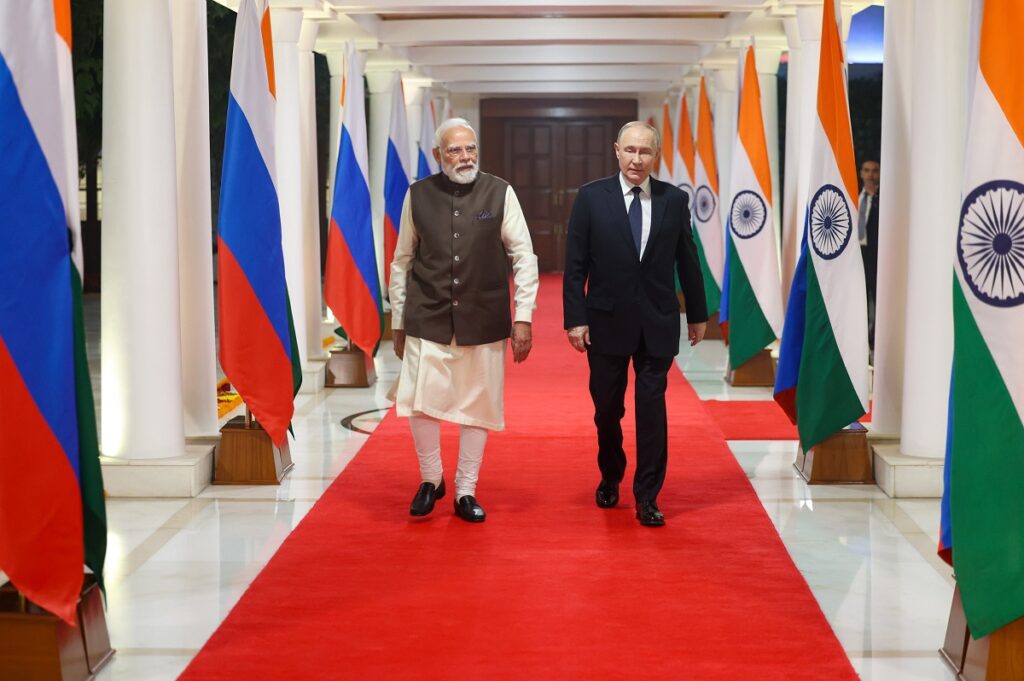
Against this backdrop, Modi and Putin are expected to use the visit to push aggressively for expansion of economic cooperation beyond traditional defence and energy pillars. The two leaders met for a private dinner on Thursday night at Modi’s residence, decorated with bright lights and flowers for the occasion. Their conversation over dinner was expected to set the tone for Friday’s 23rd India–Russia Annual Summit, which is likely to produce several tangible outcomes.
Defence Ties In Focus
Defence cooperation will be at the centre of the talks. India is expected to fast-track pending S-400 Triumf air defence system deliveries and pursue deeper co-production, including joint R&D, moving away from an exclusively buyer–seller dynamic. Defence Minister Rajnath Singh, after wide-ranging discussions with his Russian counterpart earlier in the day, described Russia as a “time-tested, special, privileged and strategic partner,” noting the significant expansion of defence ties since the 2000 Strategic Partnership declaration. The S-400 systems, Singh noted, proved highly effective during Operation Sindoor.
There may also be discussions on the possibility of Russia supplying Su-57 fifth-generation fighter jets, with India currently in the process of evaluating options alongside major contenders such as the Rafale, F-21, F/A-18, and Eurofighter Typhoon.
Russian Oil
Energy cooperation is set to feature prominently as well. Russia is understood to have offered additional discounts on crude oil amid a recent dip in India’s purchases following the latest round of US sanctions on Russian oil producers. The impact of those sanctions—and their implications for India’s energy security—will be closely reviewed. Kremlin spokesperson Dmitry Peskov recently acknowledged that India’s oil imports may decline “for a brief period” due to Western restrictions, but said Moscow was working proactively to stabilise supplies.
Trade will be another key pillar of the summit. India remains concerned about a ballooning trade deficit largely driven by its large-scale purchases of Russian crude. While India’s annual procurement of Russian goods and services stands at about USD 65 billion, Russian imports from India amount to only around USD 5 billion. New Delhi is expected to push for significant expansion of Indian exports, particularly in pharmaceuticals, agriculture, food products, consumer goods and fertilisers—Russia currently supplies three to four million tonnes of fertiliser to India annually. Discussions are also expected on the proposed India–Eurasian Economic Union free trade agreement.
A number of agreements are likely to be signed following the summit on Friday, including those aimed at insulating bilateral trade from external pressures, facilitating the movement of Indian workers to Russia, and expanding logistical support under a broader defence cooperation framework. Cooperation in emerging technologies and small modular nuclear reactors is also on the agenda.
On Friday, Putin will be accorded a ceremonial welcome and tri-services guard of honour at Rashtrapati Bhavan, followed by a visit to Raj Ghat to pay homage to Mahatma Gandhi. The leaders will then hold restricted and delegation-level talks at Hyderabad House before attending a business event jointly organised by FICCI and Roscongress at Bharat Mandapam. In the evening, President Droupadi Murmu will host a state banquet for the Russian leader, who is expected to depart New Delhi around 9 pm.
Putin’s arrival marks one of India’s most consequential diplomatic moments of the year. As New Delhi navigates unprecedented geopolitical headwinds while striving to preserve its strategic autonomy, the outcomes of the Modi–Putin summit will be watched closely in capitals across the world.