Best laptops for engineering students: Top 5 picks for power and portability
Best laptops for engineering students: Top 5 picks for power and portability
Engineering school isn’t for the faint of heart. You’re juggling heavy-duty software and unforgiving deadlines. So yeah, your laptop has to be powerful and reliable, but light enough to actually carry.
It should run CAD and simulations easily, but still be light enough to toss in your bag between classes. A keyboard that’s comfortable to type on for hours on end, a screen that doesn’t strain your eyes after an hour, and a battery that actually lasts—these are non-negotiable. And don’t even get me started on hunting for an outlet when your laptop’s gasping for life… ugh. No thanks.
These picks have been tested to cover those bases, with something for every budget.
Why you should trust PCWorld for laptop reviews and buying advice: It’s in our name! PCWorld prides itself on laptop experience and expertise. We’ve been covering PCs since 1983, and we now review more than 70 laptops every year. All of the picks below have been personally tested and vetted by our experts, who’ve applied not only performance benchmarks but rigorous usability standards. We’re also committed to reviewing PC laptops at every price point to help you find a machine that matches your budget.
Asus Zenbook 14 OLED – Best overall
Pros
- Robust build quality
- Attractive OLED touchscreen
- Good CPU and integrated GPU performance
- Outstanding battery life
Cons
- Design is dull
- Keyboard isn’t memorable
- Mediocre connectivity
Best Prices Today:

Who should buy the Asus Zenbook 14 OLED?
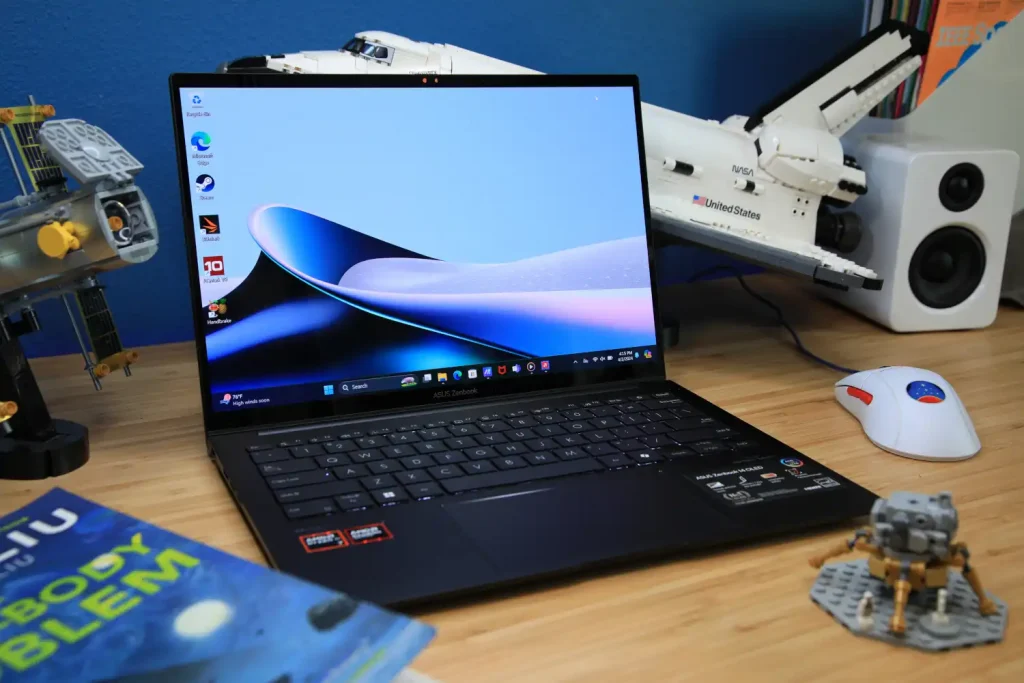
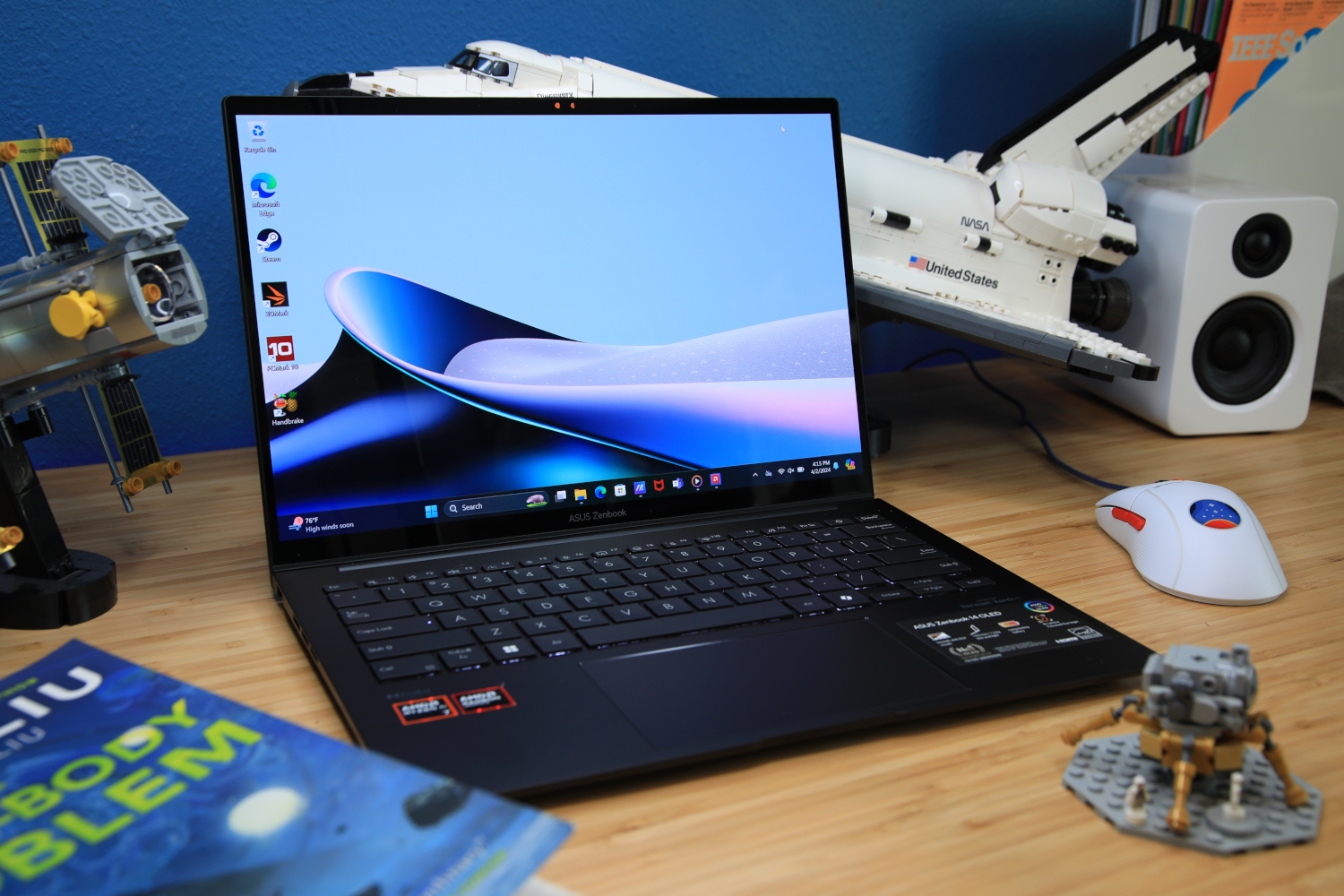
The Asus Zenbook 14 OLED tops our list because of the brilliant combination of power, portability, and battery life. The AMD Ryzen 7 chip is designed to run heavier programs like CAD without slowing down, even if you’ve got a bunch of tabs open on the side. The 14-inch 1920×1200 OLED touchscreen also looks fantastic and will make your diagrams and other projects really pop.
The one thing that really sticks out is the battery, though. Seriously, it went for over 16 hours in our test, which kind of blew my mind. You can definitely survive a whole day of classes, especially with conservative use and the brightness turned down. The audio is also quite good, offering you good volume and clarity during remote lectures.
Asus Zenbook 14 OLED: Further considerations
The build quality’s pretty good, especially considering it’s just $699 as of this writing. It’s also thin (0.59 inches) and light (2.82 pounds), which is great if you’re running from class to class. While the keyboard isn’t the best we’ve ever used because of the undersized keys, it’s totally fine for day-to-day use.
Read our full
Asus Zenbook 14 OLED review
Acer Aspire Go 15 (2025) – Best budget option
Pros
- Great value
- Solid display
- Generous RAM and storage for the price
- Reasonable webcam and mic
Cons
- Slow Intel N-series CPU
- No fingerprint reader or facial recognition
- Middling battery life
- No keyboard backlight
Best Prices Today:
Who should buy the Acer Aspire Go 15 (2025)?
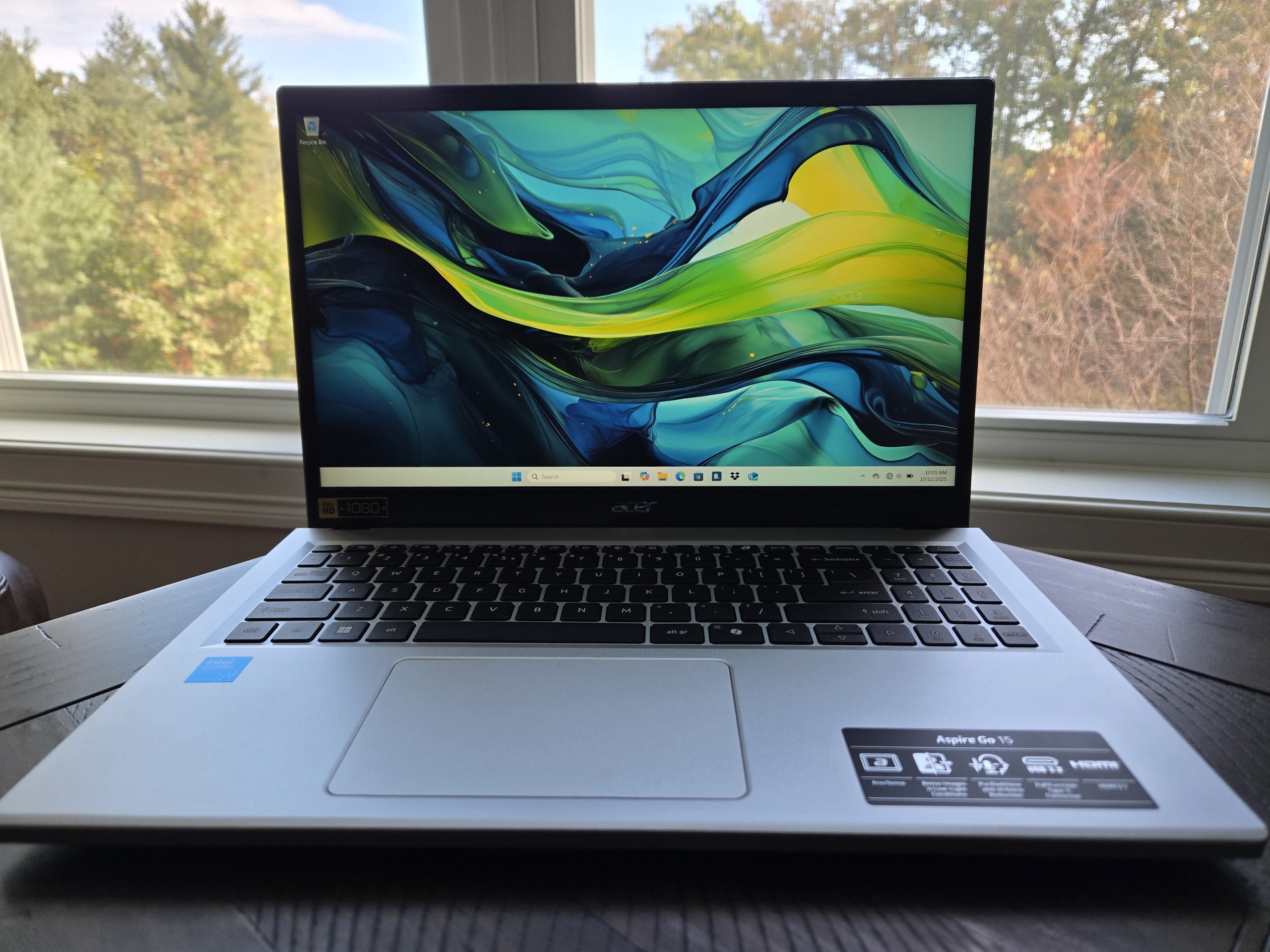
If you’re on a tight budget and just need a simple laptop for light engineering coursework like MATLAB scripting and basic coding, the Acer Aspire Go 15 offers great value. Its Intel Core i3-N355 isn’t the fastest chip out there in the universe, but it is capable enough for writing papers, light productivity apps, and streaming–just don’t expect it to handle anything too demanding.
The real standout here is the generous amount of storage and RAM. You’re getting 16GB of RAM and 512GB of SSD storage, which is rare at this price point ($499 at the time of this writing) and will ultimately make the machine run smoother. The 15.6-inch 1080p is also a nice step up from the smaller screens you see on budget models, and the port selection (USB-C, USB-A, HDMI) makes connecting to peripherals a real breeze.
Acer Aspire Go 15 (2025): Further considerations
This Acer Aspire Go 15 laptop is made of all plastic, so it may feel a bit flimsy to some. There’s no backlit keyboard or fingerprint reader, either (if that matters to you). It’s also not equipped to handle demanding engineering software like heavy simulations. That said, for students doing just general coursework and light coding, this laptop will get the job done.
Read our full
Acer Aspire Go 15 (2025) review
HP OmniBook 5 14 – Best battery life
Pros
- Enjoyable keyboard
- Attractive 1200p OLED display
- Incredible battery life
- Ships with small GaN charger
Cons
- Though attractive, build quality doesn’t stand out
- Connectivity is limited
- So-so performance
Best Prices Today:
Who should buy the HP OmniBook 5 14?
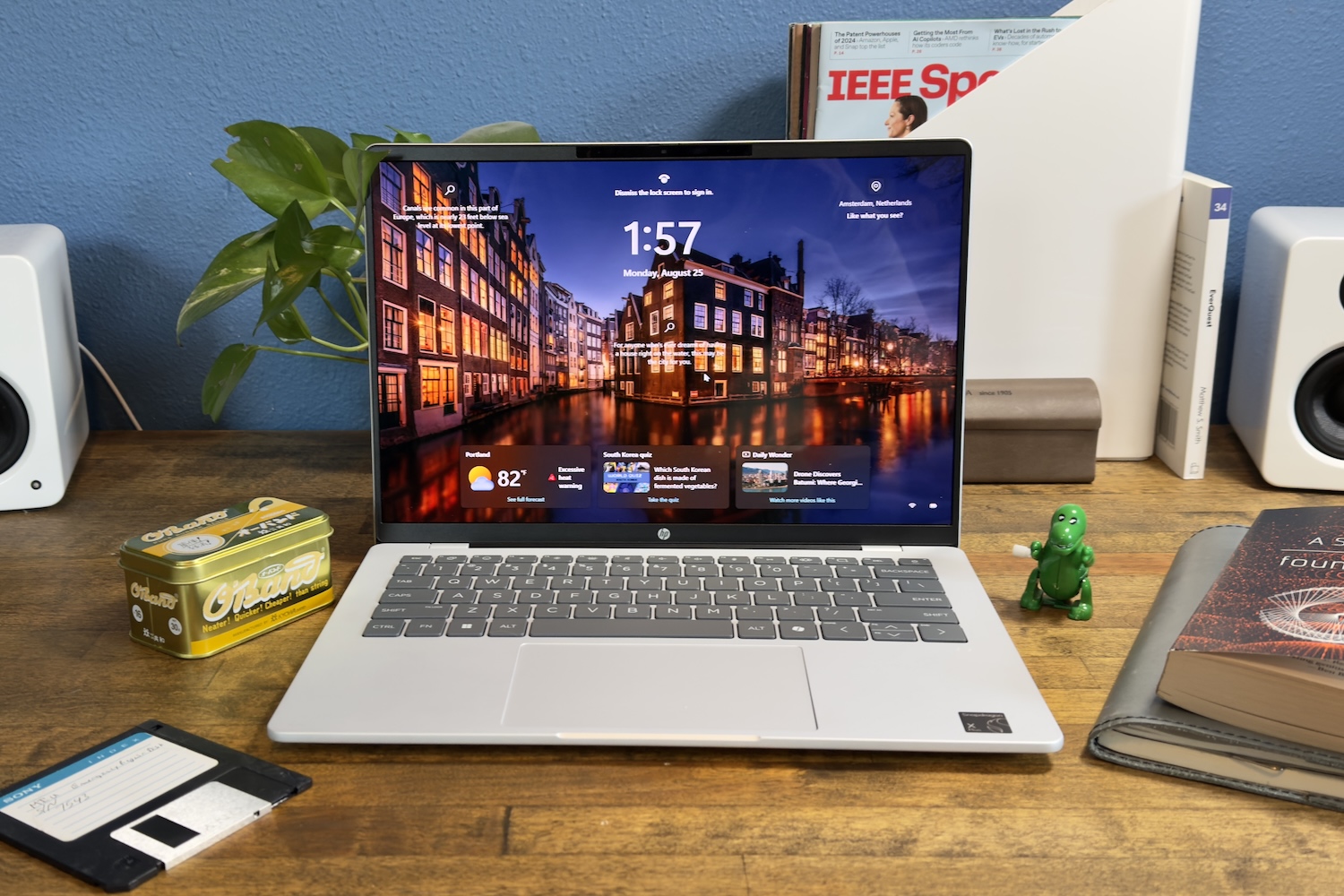
If you’re an engineering student who needs a laptop that just keeps on going, the HP OmniBook 5 14 is the one to get. This thing ran for over 25 hours on a single charge. That’s basically a full day, night, and then some. And when it’s time for a quick top-up, the fast charging mode can get you from zero to 50 percent in as little as 30 minutes. It also comes with a tiny 65-watt GaN charger that’s easy to throw in a bag.
Inside it’s running a Snapdragon X Plus chip and it comes paired with 32GB of RAM and 1TB of SSD storage. It’s not a speed demon by any means, but it’s fine for day-to-day use. The chip is more about efficiency than raw power, which is probably what makes the battery life so good. The 14-inch 1920×1200 OLED display looks great too with nice colors and contrast.
HP OmniBook 5 14: Further considerations
The HP OmniBook 5 14 gets battery life and portability right, but there are a few trade-offs. Performance is fine for browsing and coding, but it’ll struggle with heavy 3D modeling or gaming. That said, if your priority is all-day battery life and a lightweight form factor (2.98 pounds by the way!), the OmniBook delivers in a big way.
Read our full
HP OmniBook 5 14 review
Acer Nitro V 16 AI – Best for work and gaming on a budget
Pros
- Large touchpad compared to alternatives
- 16-inch 1200p display at a low price
- Lots of physical connectivity
- Good battery life for a budget gaming laptop
Cons
- Sub-par CPU performance
- Terrible audio quality from built-in speakers
- Wireless connectivity stuck on the Wi-Fi 6 standards
- Slightly more expensive laptops offer better value
Best Prices Today:
Who should buy the Acer Nitro V 16 AI?
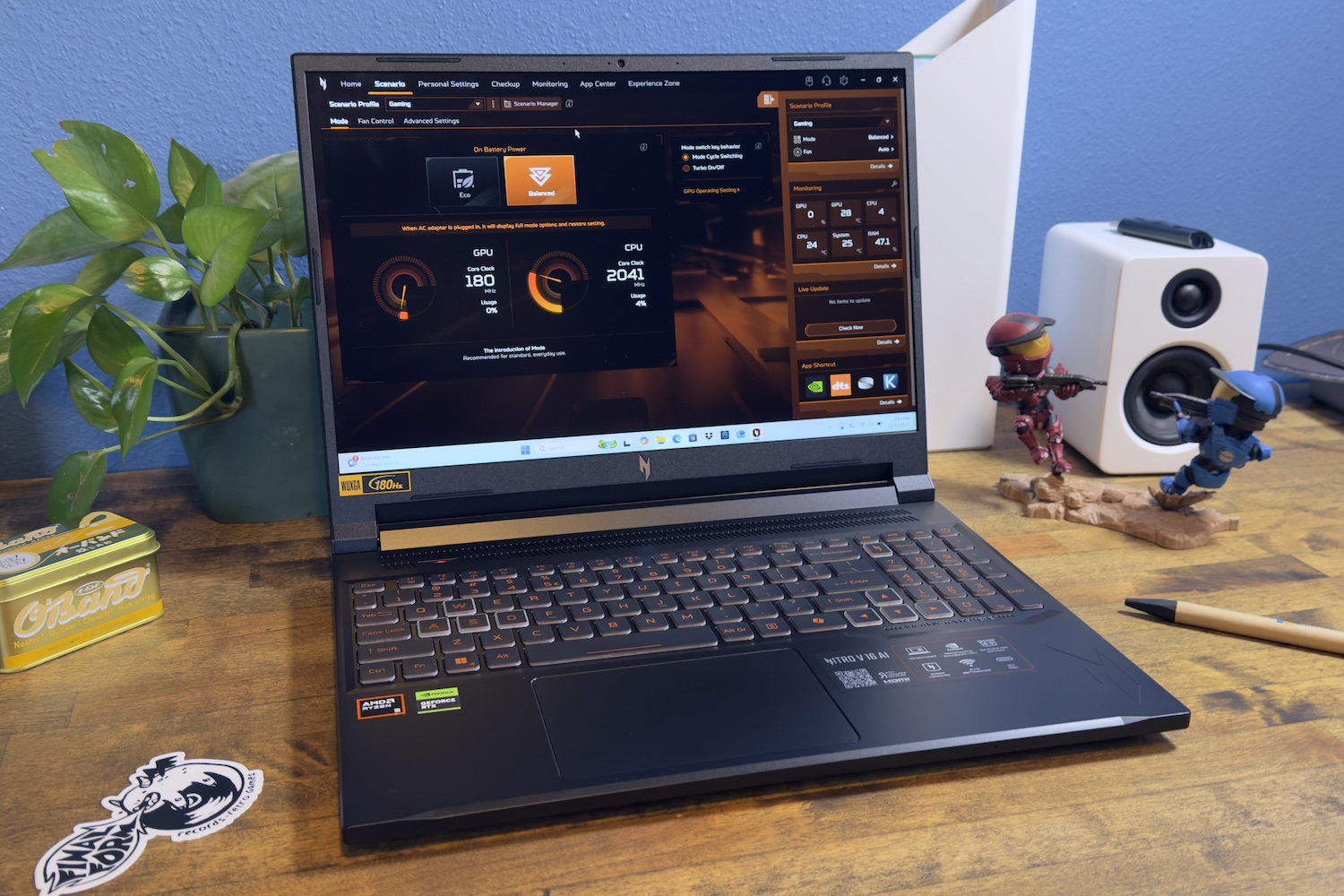
If you’re an engineering student who likes to game after class, the Acer Nitro V 16 AI is worth considering. The RTX 5050 tucked inside delivers smooth 1080p gaming, hitting a respectable 72 FPS in Cyberpunk 2077 on Ultra settings. It also gives extra firepower for CAD modeling and rendering tasks. The 16-inch 1920×1200 IPS display is slightly taller than the typical 15.6-inch 1080p screens, so you’re getting more vertical workspace here–this is useful for coding, spreadsheets, and so on. At an MSRP of $799, it’s a budget-friendly option for students.
Acer Nitro V 16 AI: Further considerations
The AMD Ryzen 5 240 isn’t the fastest CPU around, and the speakers aren’t impressive, but despite these trade-offs, the Acer Nitro V 16 AI avoids common pitfalls most budget gaming laptops fall into. It lasted 12 hours on a single charge in testing, which is impressive for a gaming machine. The keyboard and touchpad are also spacious, making it comfortable to work on for long periods.
Read our full
Acer Nitro V 16 AI review
Microsoft Surface Pro (2025) – Best ultraportable
Pros
- Compact and well-built
- Good office performance
- All Copilot Plus features available
- Good battery life
Cons
- Narrow screen to work on
- No HDR support
- No charger included
Best Prices Today:
Who should buy the Microsoft Surface Pro (2025)?
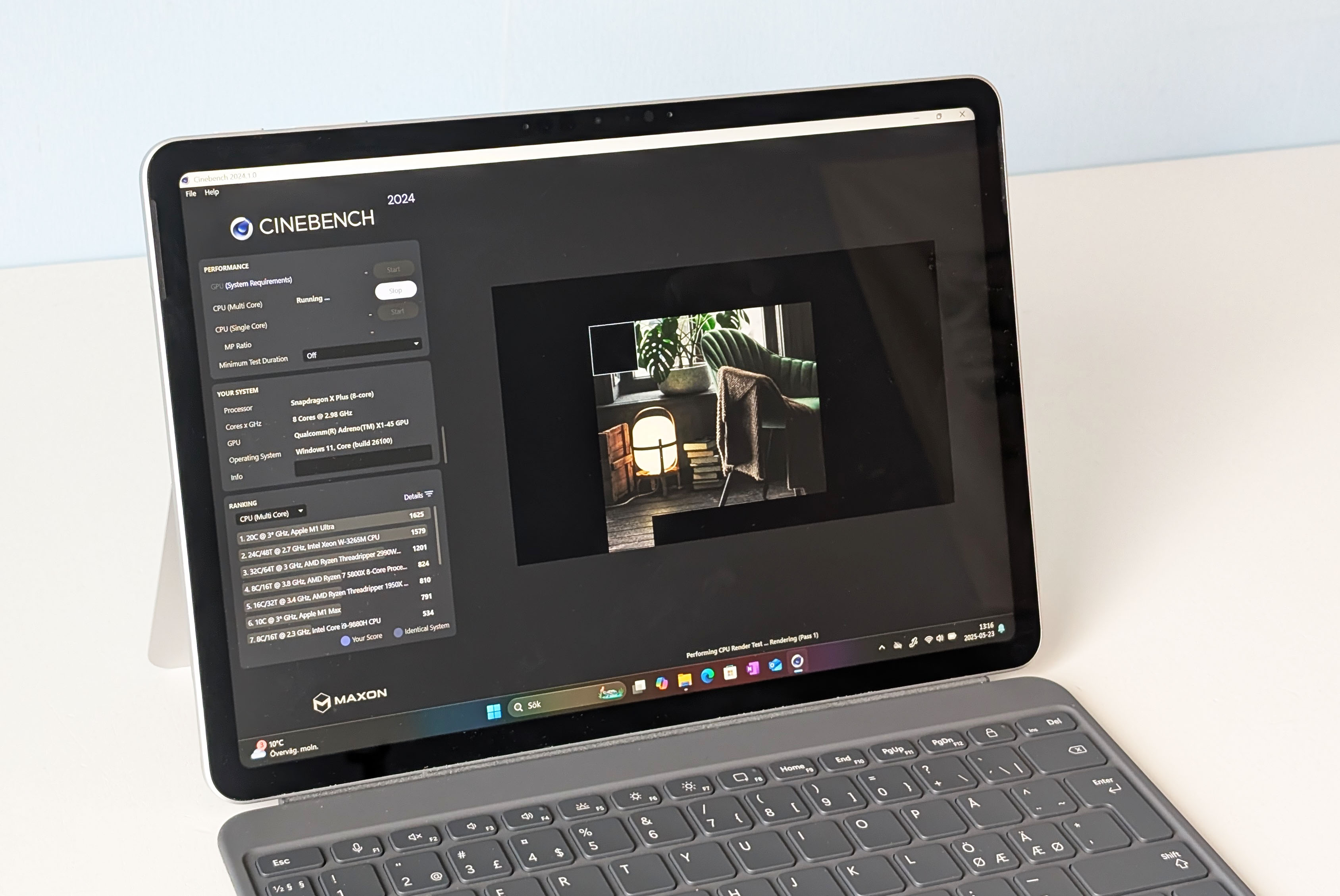
If you’re an engineering student with a jam-packed schedule, often needing to run from class to class, the Surface Pro 2025 is so lightweight (just a little over a pound) you’ll hardly notice its presence. Inside this laptop you’ll find a Snapdragon X Plus chip and Intel Arc 130V graphics, so you can expect it to deliver a quiet, fanless experience (perfect for working in libraries and lecture halls), and it should handle basic coding and homework just fine.
The 12-inch 2196×1464 screen offers sharp colors and touchscreen capabilities, allowing you to draw and take notes with the (optical) Slim Pen.
Microsoft Surface Pro (2025): Further considerations
Though we really vibe with the high-resolution display, it’s a bit small if you’re the kind of person that has many windows open at once. Battery life is all over the place, ranging from two to three hours under heavy loads to 19 hours with light usage. You’re also limited to just two USB-C ports, so you’ll probably want to pick up a dock or hub.
Read our full
Microsoft Surface Pro 2025 review
Other notable laptops we’ve tested
A few laptops just missed the top spots but are still worth checking out. The Dell 14 Premium ($2,049.99) looks great and handles everyday work like a champ, though the battery isn’t amazing and it’s missing some older ports you might need. The Lenovo Legion 5i 15IRX10 ($1,199) is a powerhouse for gaming with a gorgeous 15.1-inch 1600p OLED display and solid performance, but Lenovo’s pricing can be a little confusing. And, if you’re on a budget, the Asus Chromebook CX15 ($159) gets the job done for basic tasks and schoolwork, even if it’s not lightning fast.
How we test laptops
The PCWorld team puts each and every Windows laptop through a series of benchmarks that test GPU and CPU performance, battery life, and so on. The idea is to push the laptop to its limits and then compare it against others we’ve tested. Chromebooks, on the other hand, go through a series of web-based tests.
For a much deeper look at our review methodology, check out how PCWorld tests laptops.
Who curated this article?
Hi, I’m Ashley Biancuzzo, and I oversee all laptop and Chromebook coverage at PCWorld. While you’ll see me review Chromebooks on occasion, I’m also really into the broader world of consumer tech. I spend a lot of time writing and thinking about where laptops are headed–from AI and sustainable designs to long-term trends. When I’m not deep in the world of tech, you’ll probably find me gaming, getting lost in a good book, or chilling with my rescue greyhound, Allen.
How to choose the best laptop for engineering students
The following are important questions to ask before making a purchase.
How much power do you need?
You’ll need a good amount of power. Engineering classes usually have you running some pretty heavy stuff like CAD, MATLAB, SolidWorks, and simulations. That stuff can slow your laptop down if it’s not up to the task, especially if you’ve got a bunch of apps open. A Core i5 or Ryzen 5 will get you through most of it, but if you want things to run smoother, a Core i7 or Ryzen 7 is where it’s at (so long as your wallet agrees).
Is RAM important?
For sure. You’ll be using code editors, compilers, simulation tools, sometimes all at once. RAM keeps your laptop from freezing up when you’ve got a ton going on. 8GB might work if you’re just starting out, but 16GB is way better—especially later on when your classes get more intense.
How much storage should you get?
You’ll collect a ton of files–project folders, software installs, maybe some video editing or game dev work depending on your focus. We’d say go for at least 512GB SSD so you’re not constantly clearing space. If you can get 1TB, do it. It’s faster and gives you more breathing room for whatever your classes (or side hobbies) throw at you.
FAQ
What is the best laptop for engineering students?
If you’re an engineering student who needs something light, fast, and reliable for coding or writing papers (plus a great screen and battery), the Asus Zenbook 14 OLED is a dang fine pick.
What is the best budget laptop for engineering students?
If you’re on a tight budget and just need a straightforward for lighter coding programs, the Acer Aspire Go 15 gets the job done for just under $500.
Is battery life important for engineering students?
Heck yeah! Long battery life means you can power through those long nights at the school library.
What’s the ideal screen size for an engineering laptop?
We’d say the best screen size is anywhere from 13- to 15-inches. It can’t be too cumbersome otherwise it’ll get difficult to carry around.
Related content
- PCWorld laptop reviews
- What’s new when shopping for a laptop in 2025? 8 things to keep in mind
- When PC vendors tell you what’s going on with tariffs, pay attention
- How to try a new laptop at home before you commit to buying it
- How to properly wipe your laptop data before getting rid of it
- 4 eco-friendly ways to get rid of a laptop
- Battery life on gaming laptops doesn’t have to suck anymore
- Best laptops for college students 2025: Top picks and expert advice
- Best gaming laptops under $1,000: Expert picks that won’t break the bank
Summary: A technology and innovation update curated by IndiaTips.in.
Why this matters: Tech changes can impact users, devices, software, privacy, and digital services.
Source: Original tech article via PCWorld